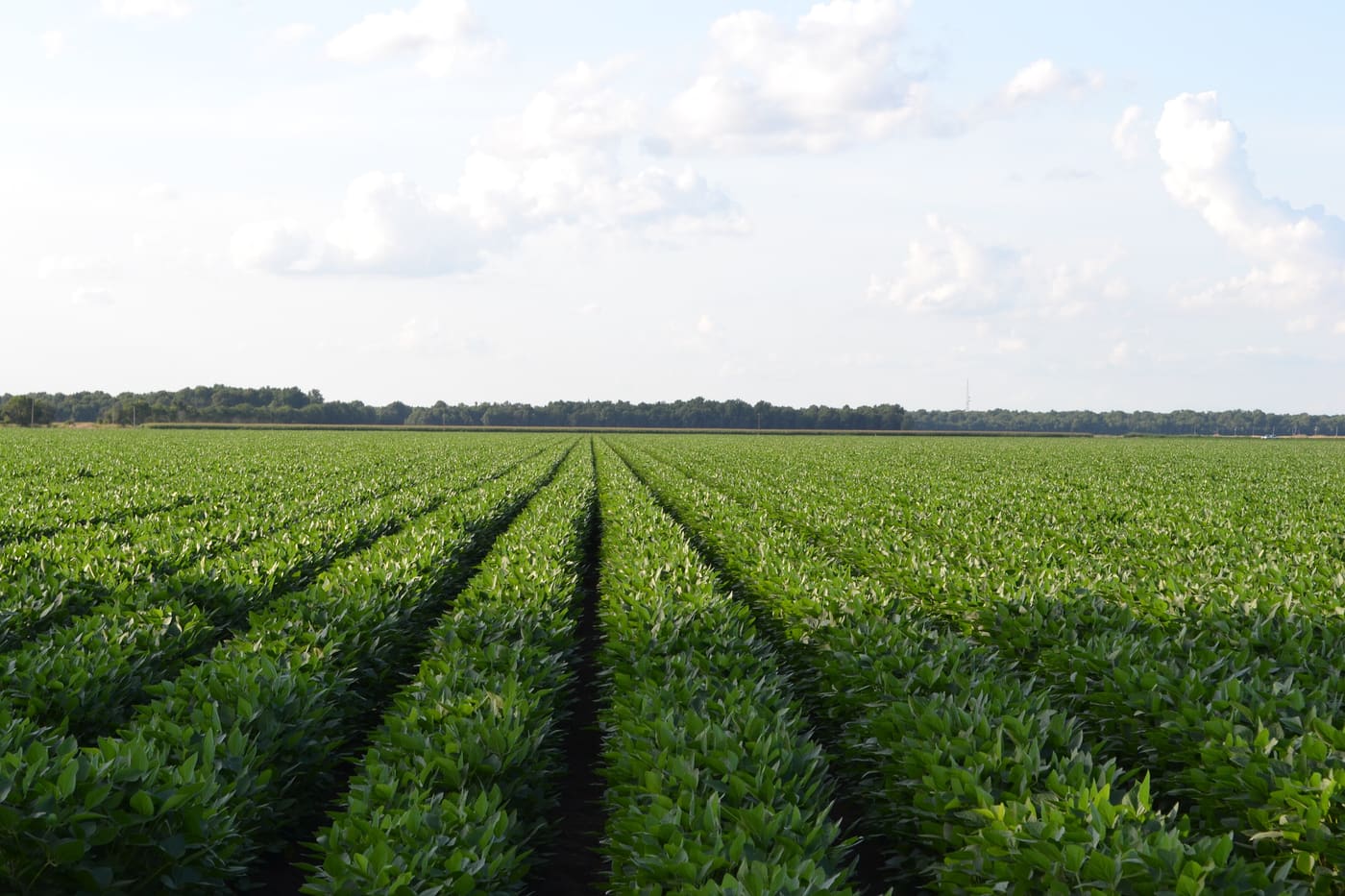
The 2025 average price
According to the Dirección de Estadísticas Agropecuarias (DIEA) of Uruguay's Ministry of Livestock, Agriculture and Fisheries, the national average price for farmland in 2025 was USD 4,178 per hectare, up roughly 5% on 2024 and the highest annual figure in the entire series.
In the second half of 2025 the average reached approximately USD 4,260/ha, above the full-year figure, indicating the upward movement continued into year-end.
The full series since 2000
The annual figure alone says little. It becomes informative over time, and the series shows two distinct phases: a steep climb to 2014, and broadly sideways movement in current dollars since.
Move across the curve to read a year.
Market volume: how liquid is it?
An average price means little if almost nothing trades. For 2025 DIEA reports:
- 1,718 transactions during the calendar year
- 258,942 hectares traded
- approximately USD 1.08 billion in total volume
For context, Uruguay has roughly 16 million hectares of agricultural land. A meaningful but far from overheated share changes hands each year. For a buyer that means real deal flow and, crucially, real comparables.
Where the activity was
| Department | Area traded 2025 |
|---|---|
| Paysandú | 31,999 ha |
| Durazno | 25,464 ha |
| Treinta y Tres | 23,994 ha |
Activity is spread across the country. Uruguay is small enough that no department is structurally left behind, price differences track soil quality and infrastructure rather than any centre-periphery logic.
Why the average can mislead
The national average blends very different things: high-grade cropland in the southwest, extensive grazing land in the north, and large forestry blocks. A handful of very large timberland transactions by international funds can visibly move the national average in a single half-year.
For an actual purchase decision the national average is therefore only a frame of reference. What matters are comparable transactions in the same zone, at a comparable CONEAT index, with comparable infrastructure.
The trend since 2010
Between 2010 and roughly 2014 prices rose sharply, driven by strong world prices for soy and beef. A correction followed, with land values adjusting to falling farm margins. Since about 2020 that tight coupling to the commodity cycle has loosened: prices have been more stable and have trended upward again since 2023.
The usual explanation for this decoupling is the growing share of long-horizon capital entering the asset class, capital that treats land as a real asset rather than as leverage on the next harvest price.
Frequently asked questions
How much does a hectare of farmland cost in Uruguay?
The national average in 2025 was USD 4,178 per hectare according to DIEA/MGAP. The actual range is considerably wider and depends on soil quality, land use, water access and location.
Are prices denominated in US dollars?
Yes. Farmland transactions in Uruguay are customarily denominated in US dollars, and the official DIEA statistics are published in USD.
Where can I find the official figures?
Uruguay's Ministry of Agriculture (MGAP) publishes the "Precio de la Tierra" series publicly twice a year through DIEA.
Sources
- DIEA / MGAP: Anuario Estadístico Agropecuario ↗
- DIEA / MGAP: Serie „Precio de la Tierra" (Compraventas) ↗
Figures verified on 2026-07-27
This article is for information purposes only and does not constitute investment, legal or tax advice. AegisTierra does not provide legal or tax advice; it coordinates vetted local specialists.