Productive land.Lasting value.
AegisTierra guides DACH-region investors through the acquisition of agricultural land in Uruguay: independent, discreet, and backed by a network of leading local partners.

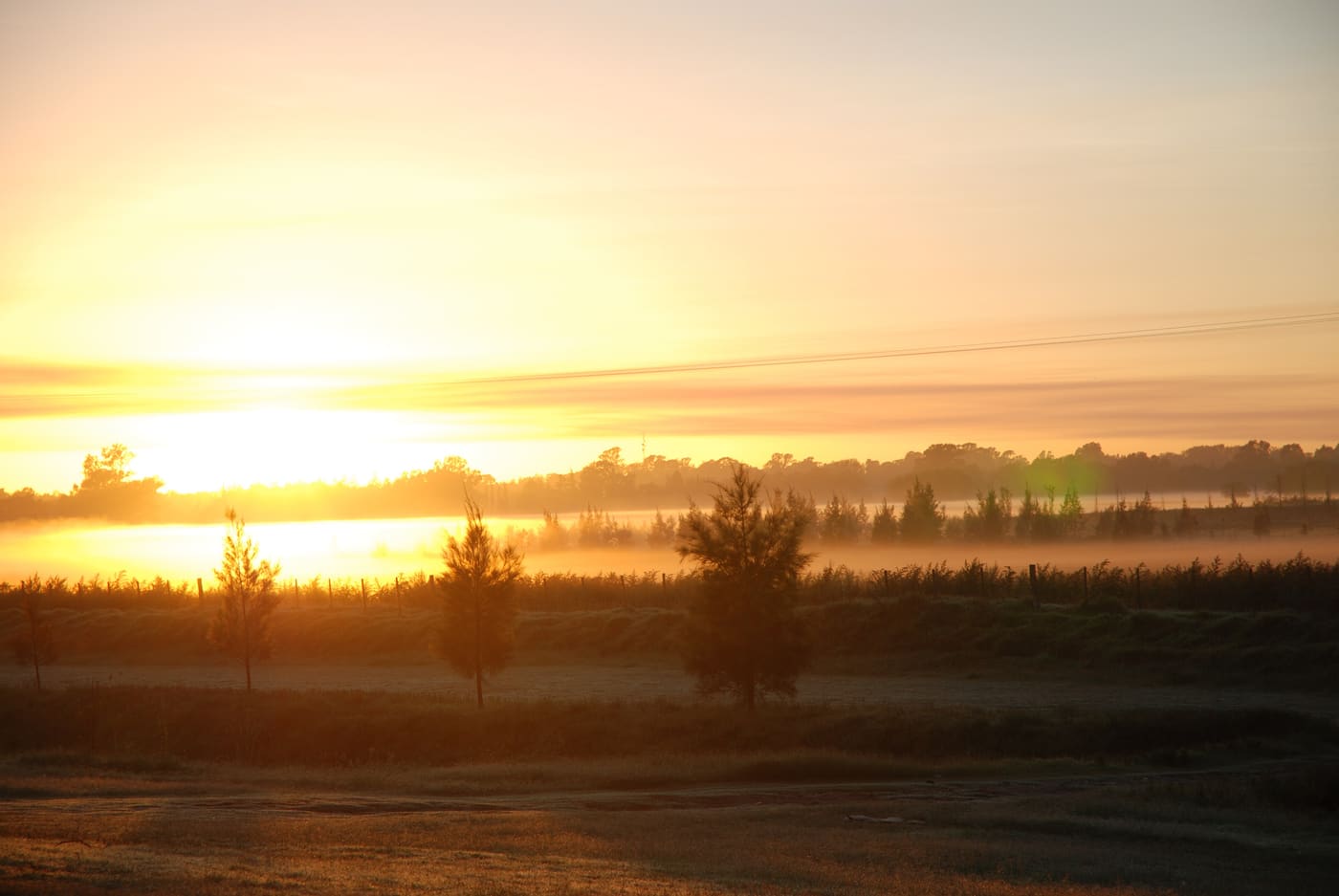
The Bridge Between Vienna and Montevideo
Acquiring agricultural land in Uruguay demands deep local knowledge, reliable partnerships, and thorough understanding of the legal and tax framework. That is precisely what we provide.
AegisTierra acts exclusively for the buyer side. We offer no properties of our own and take no payment from sellers or their agents. As your single point of contact we coordinate every step from initial analysis through notarial closing, drawing on a carefully curated network of local specialists.
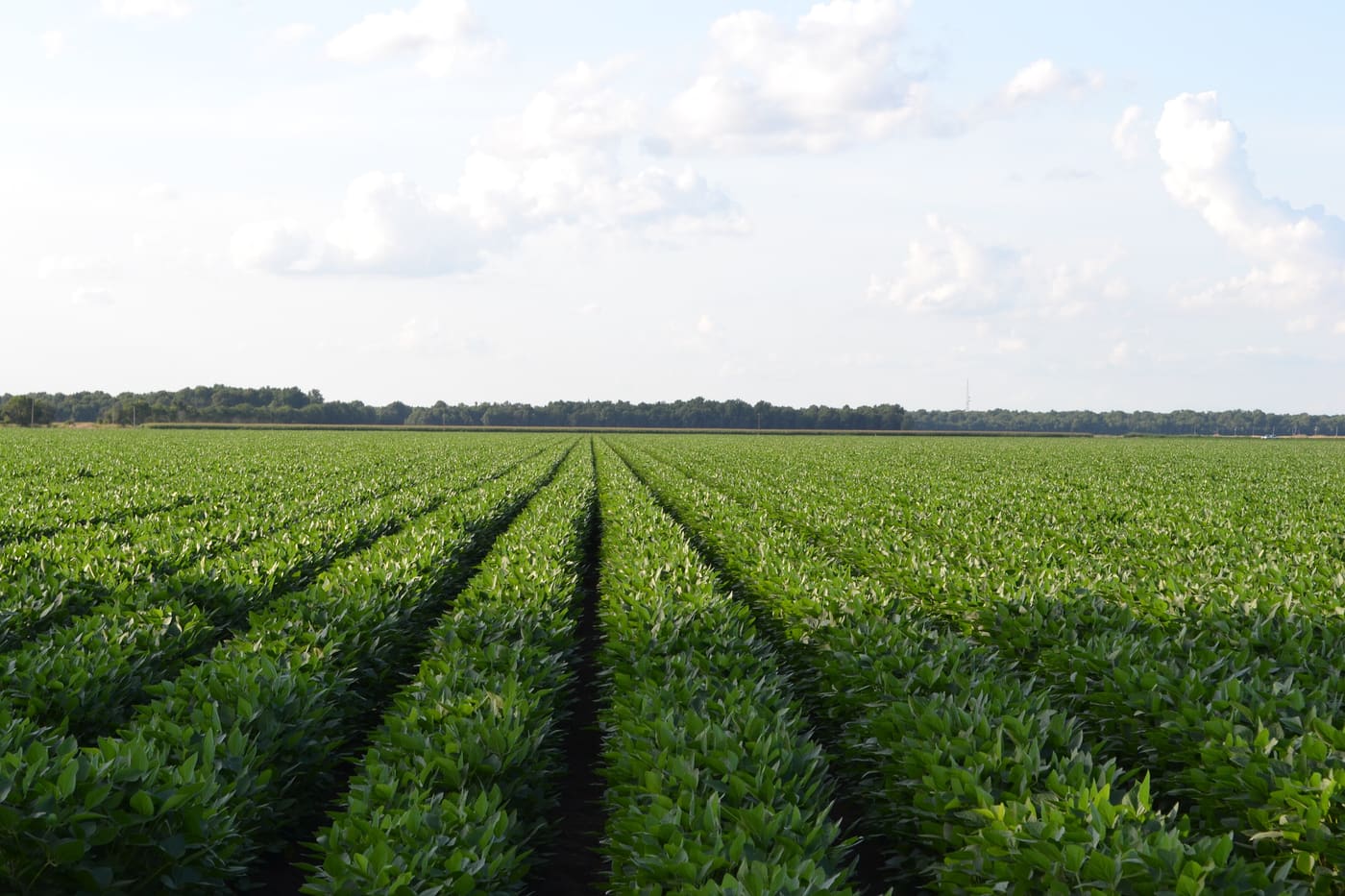
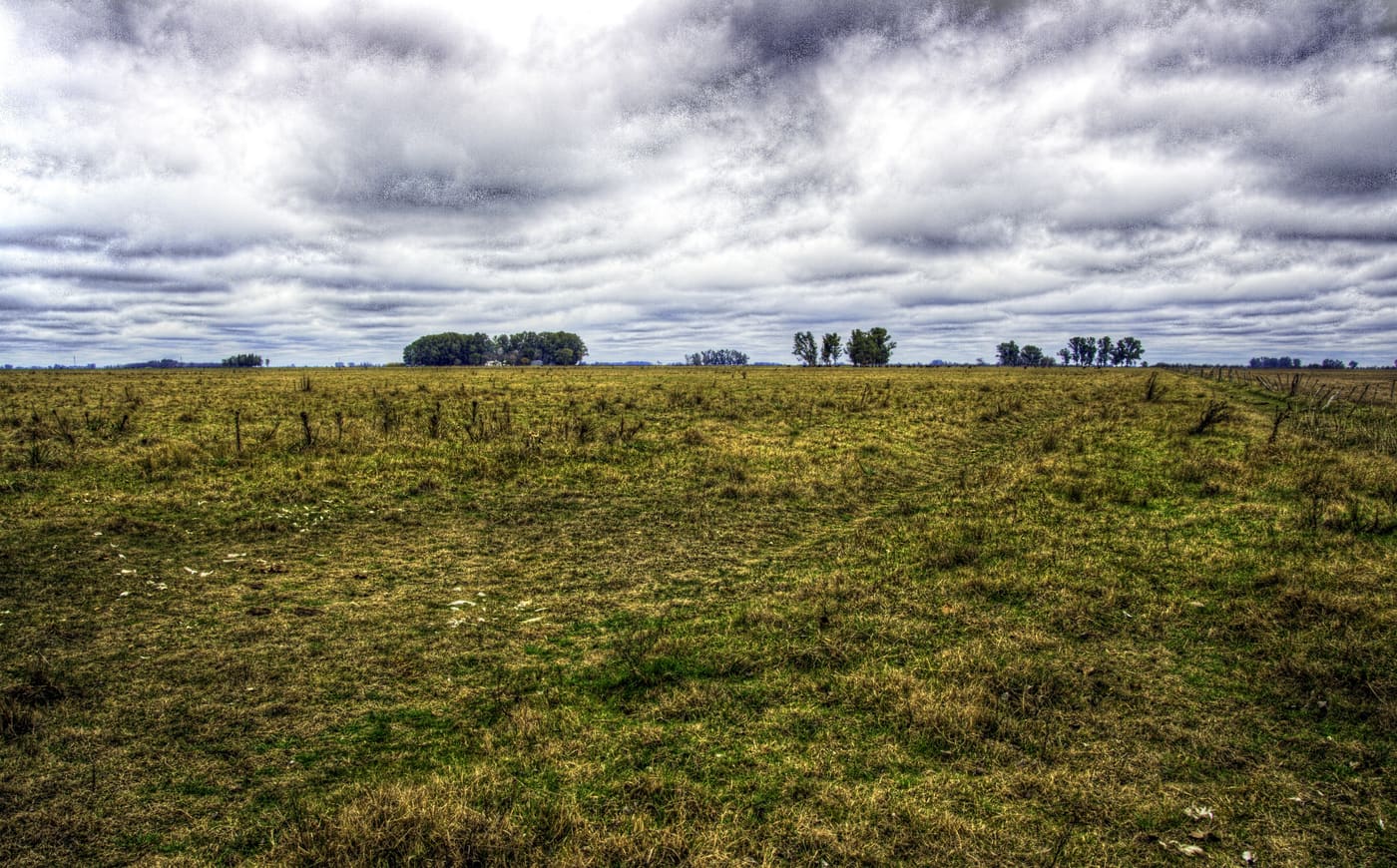
In Uruguay a foreigner buys land on the same terms as a citizen.
- No applicationNo authority decides whether you may buy.
- No ceilingNo hectare limit for foreign owners.
- No residenceYou do not have to move there to own it.
Ley 18.092The single condition concerns legal form, not nationality: rural land must be held by natural persons, or by companies whose capital consists entirely of nominative shares held by natural persons.
What that is worth
For decades the answer for a European was Canada, later New Zealand. Both have since closed. That is not a marketing claim: it is written into provincial statutes and into the Overseas Investment Act.
The mean parcel traded in Uruguay measures 151 hectares. In Saskatchewan a non-resident may not own even one fortieth of that.
Bar length relative to that parcel. Argentina and Uruguay run past the edge. Mean parcel: DIEA/MGAP, area traded divided by contracts of sale, 2025.2026-08-02
Do not take our word for it
Say instead what has to be true for you, and watch the field narrow. Every country that drops out names the rule it fails. On a single requirement several countries are still standing, because that is the truth.
- Uruguay
- Chile
- Costa Rica
- Panama
- Paraguay
- New Zealand
- Australia
- Canada
- Argentina
- Brazil
What this rests on
Equal treatment is worth little if the state behind it wobbles. Here is where each figure comes from. Every row opens onto its evidence.
Uruguay scores 8.67 out of 10 in the Economist Intelligence Unit's Democracy Index 2024, ranking 15th of 167 states. It is the only country in South America classified as a full democracy.
In Transparency International's Corruption Perceptions Index 2025 it scores 73 out of 100 and ranks 17th of 180, the highest score in Latin America.
For a foreign buyer this is not a feel-good statistic. It speaks to three concrete things: whether a register entry holds, whether a contract is enforceable in court, and whether permits are granted by rule or by relationship.
Source: EIU Democracy Index 2024 ↗ · Transparency International CPI 2025 ↗
Uruguay imposes no approval requirement on foreign buyers, no local participation quota and no cap on the area acquired. That separates it from several neighbouring states which limit foreign holdings of farmland.
One restriction does exist and is often missed: Law No. 18,092 requires rural property to be held by natural persons, or by companies whose entire capital consists of nominative shares held by natural persons. It concerns the legal form of the owner, not nationality.
In practice: the obvious route through an existing company or holding belongs under review before the purchase, not after it.
Ownership structure in detail →Source: Ley N° 18.092 (07.01.2007) ↗
Uruguay operates no exchange controls. Capital moves in and out without quantitative limits, and the farmland market prices in US dollars rather than local currency throughout. For a European buyer that removes exposure to a soft currency.
What remains is euro against dollar. If you think in euro and buy in dollars, you carry that exposure, and it should be named rather than folded away under the heading of capital freedom.
Payments above certain thresholds must run through the financial system. Settlement of the purchase price goes through the escribano.
Rainfall in Uruguay is a gradient rather than a single figure. The south sits at roughly 1,100 to 1,200 mm a year, the centre and north at 1,300 to 1,400 mm, and the far north around Artigas at about 1,600 mm. The long-run national mean is just under 1,200 mm.
It is also distributed across the year rather than concentrated in a wet season, which is why most of the country is farmed rain-fed, without irrigation infrastructure. Part of the Guaraní Aquifer, one of the largest freshwater reserves on earth, lies beneath the country.
What gets checked before purchase →CONEAT is an index of productive capacity, mapped at fine resolution across the whole national territory. The national average is 100 by definition; actual values run from about 5 on the weakest ground to over 260 on the best.
The decisive feature is that it is public. You can look up the index for a specific parcel before speaking to a seller. Soil quality here cannot be asserted; it can be checked.
That is what makes price comparison possible in Uruguay at all: price per hectare divided by CONEAT point puts parcels of different quality on the same scale.
Understanding CONEAT →Source: RENARE / MGAP: CONEAT viewer ↗
This figure is not estimated, it is divided: USD 133 of annual lease per hectare over USD 4,178 of purchase price per hectare gives 3.2 per cent. Both come from DIEA and both cover the same calendar year, 2025.
| Measure | 2025 value | Published |
|---|---|---|
| Annual lease per hectare, national | USD 133 | 09.09.2026 |
| Purchase price per hectare, national | USD 4,178 | 23.03.2026 |
| Gross yield, the quotient of the two | 3.2 % | |
| Lease contracts in the year | 2,831 | 09.09.2026 |
Gross means gross. Before tax, before management, before maintenance and before vacancy. The net figure sits below it, and how far below depends on the structure and the operation. The Contribución Inmobiliaria Rural alone is 1.25 per cent a year, assessed on the official valor real rather than on what you paid.
And a qualification that honesty requires: leased and sold hectares are not the same population. Leased area concentrates in Paysandú, Artigas and Salto, the cheaper departments of the north.
Leasing and yield →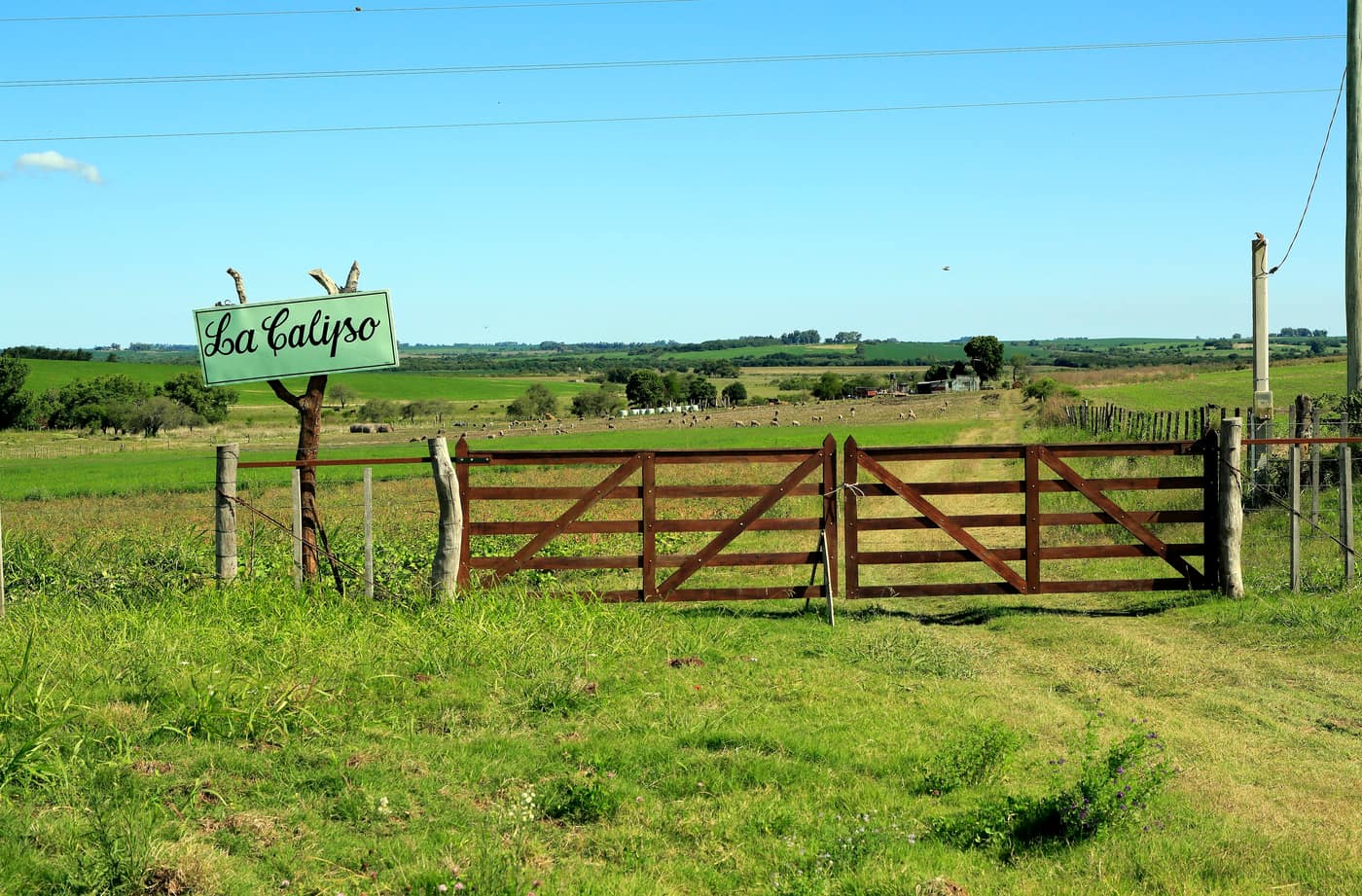
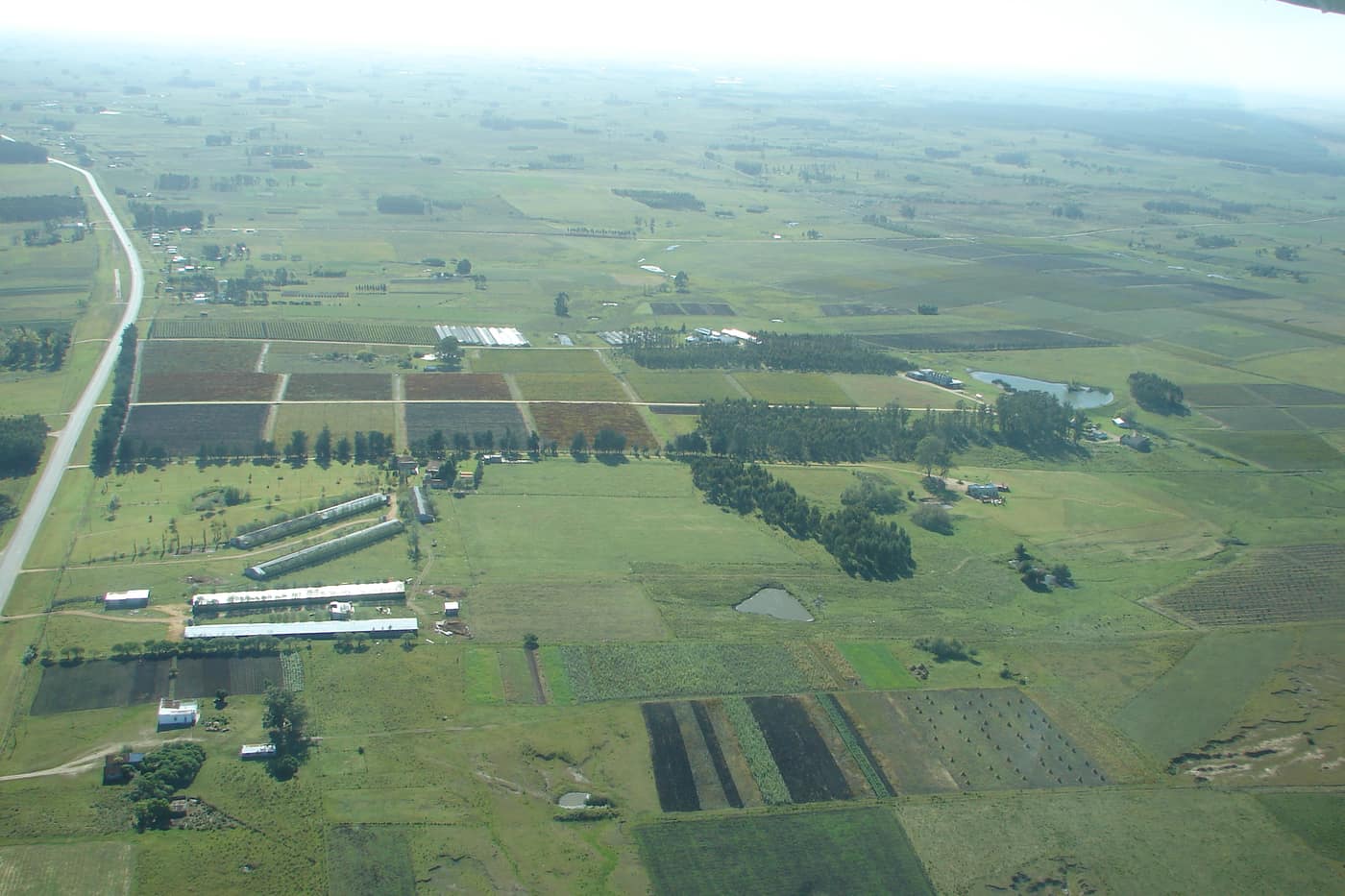
National average 2025: the highest figure in the entire series, 5% above 2024.
Across 1,718 transactions. A market with real deal flow and robust comparables.
Between Colonia and Paysandú, a two-hour drive apart. Location decides.
Uruguay publishes actual farmland sale prices twice a year. Every figure on this site can be checked at source.
Compare the regions26 years of officially recorded land price
Uruguay has published actual transaction prices since 2000. This is the whole series, not a flattering slice of it.
Move across the curve to read a year.
The full series, 2000 to 2025
Every figure on this site as a table: prices actually paid per hectare, area traded and the number of contracts of sale, for Uruguay as a whole and for each of the 18 departments.
- 482rows of data
- 19series
- 26years
CSV, 20 KB. Opens in Excel, Numbers and any spreadsheet. No sign-up.
Source: DIEA / MGAP, "Precio de la Tierra" series. The figures are official; this compilation is not.
The market report
Ten pages: what land costs in each of the 18 departments, what leasing yields, what a purchase adds on top, and the rules under which a foreigner may buy at all. Every figure with a source and a verification date.
- Prices for all 18 departments, from registered contracts of sale
- Gross yield from the official lease and price series, unvarnished
- Transaction costs with rates, and what they come to on an average parcel
- The ceilings in Canada and Argentina, with the statutes behind them
You receive the report immediately as a PDF. We also write when DIEA publishes new figures, normally twice a year. No advertising, never sold on, unsubscribe in every message.
From Initial Analysis to Title Registration
Every mandate begins with a personal conversation. Based on your objectives, we coordinate the entire process: structured, transparent, and with the finest local specialists.
Consultation & Mandate
In a confidential conversation, we jointly define your investment objectives, budget parameters, and preferences, resulting in a clearly scoped mandate.
Research & Due Diligence
Based on your mandate, we identify suitable properties through our partner network. All options are presented in a structured, directly comparable format.
Structuring & Closing
We guide the optimal ownership structure, coordinate contract negotiation, and ensure a seamless notarial closing process.
Ongoing Management
For operational management, we connect you with professional farm management partners, from leasing to active operations with regular reporting.
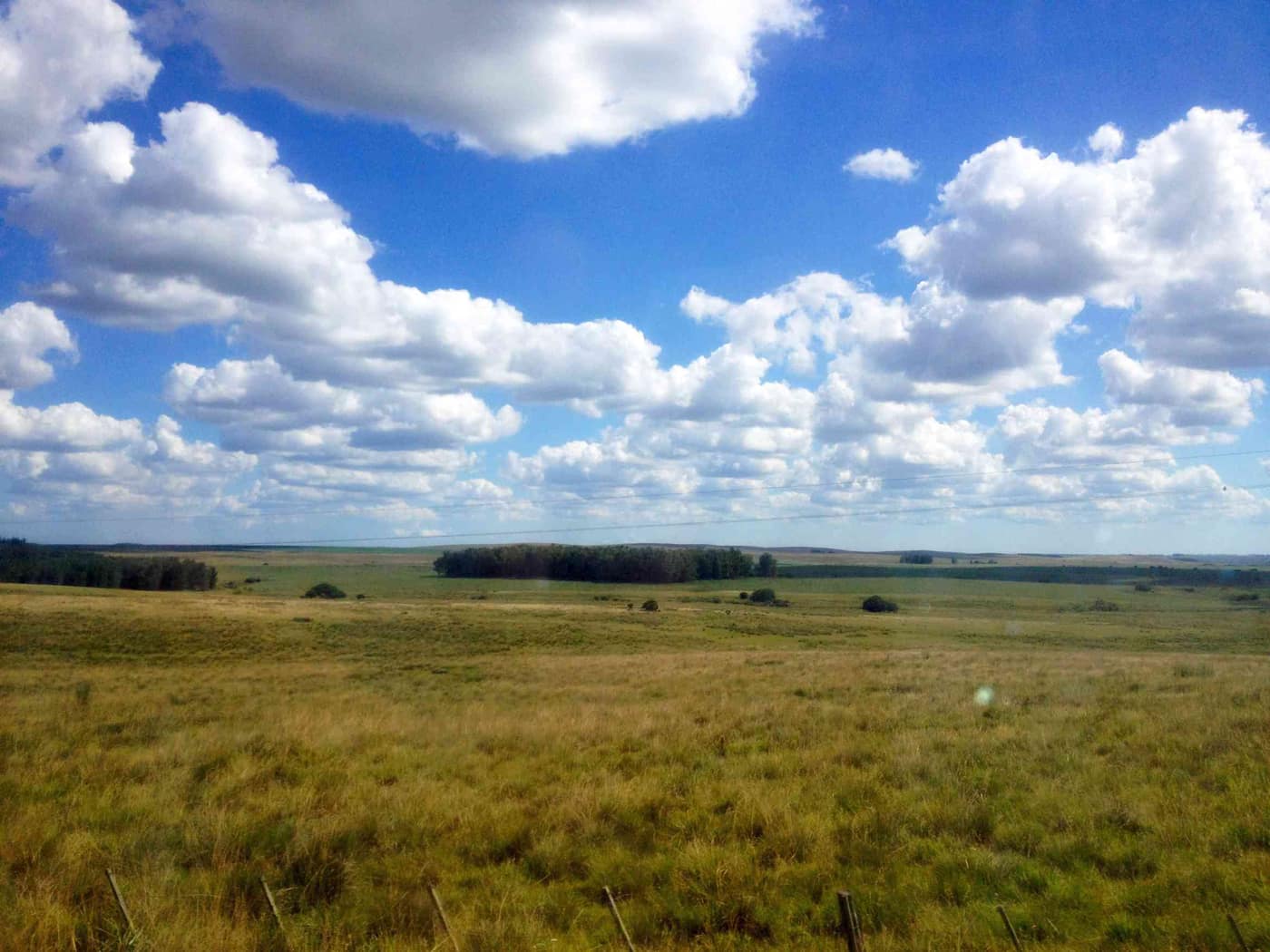
360° Service from a Single Source
We coordinate the entire investment process through our network of local specialists. You have one point of contact, we organize the rest.
Property Sourcing & Market Analysis
Systematic search across multiple providers. Curated selection of estancias, campos, or cropland, aligned to your criteria.
Legal & Tax Coordination
Our partner law firms in Montevideo verify title, ownership history, and tax structuring, aligned to your DACH situation.
Site Visits & On-Ground Analysis
Tailored inspection trips with soil analysis, infrastructure checks, and meetings with local operators and experts.
Ownership Structure & Planning
Direct acquisition, local SAS, or holding structure: optimized for inheritance law, taxation, and generational planning.
Negotiation & Closing
Professional support through contract negotiation, coordination with notary and land registry through final registration.
Management Placement
Connecting you with professional farm managers for leasing, active operations, or forestry, with ongoing reporting.
Beyond the Investment
Our commitment does not end at title registration. For clients who think further ahead, we offer tailored additional services, seamlessly integrated into our advisory process.
Plan B: Residency Solutions
For the day when it is time to explore new horizons. We guide our clients through obtaining residency in Uruguay: structured, discreet, and tailored to your individual situation.
Residential Property Investments
Tailored residential property investments, ideally rented out on a short-term basis and managed through our partner network. Optimized for returns and available for your personal use whenever needed.
Tailored to Your Investment Approach
Whether wealth preservation, yield optimization, or operational engagement, every mandate is individually structured around your priorities.
Private Investors & Family Offices
Capital preservation, geographic diversification, and direct connection to productive land, beyond financial markets and geopolitical volatility.
Institutional Investors
Scalable allocation into an uncorrelated asset class with stable cash flows, long-term USD appreciation, and ESG compatibility.
Agriculture-Minded Entrepreneurs
Direct access to one of the world's most productive agricultural markets, with professional management and full operational transparency.

Constantin Jakobljevich
I look forward to a personal conversation. Contact me directly, confidential and without obligation.
Company register, supervision and indemnity cover in the imprint →
Three questions you should be asking
Which we would rather answer now than after the first invoice.
Who pays you?
You do. Only you. AegisTierra acts for the buyer side alone, never as a seller’s agent, and offers no properties of its own. We accept no remuneration from sellers or their intermediaries, and no hidden commissions. We do not engage in dual agency within the meaning of § 5 of the Austrian Brokers Act.
That is § 2 of our terms of business, not just a line on this page.
Read § 2 of the terms →Who am I dealing with?
An Austrian limited company based in Vienna, entered in the commercial register, subject to trade supervision and covered by professional indemnity insurance. AegisTierra is a brand of Ventus XII Management GmbH. Your contact is the managing director himself, not a sales team.
- Commercial register
- FN 560998 y, Vienna Commercial Court
- VAT number
- ATU78116147
- Supervision
- City of Vienna, Department MA 63
- Indemnity insurance
- Allianz, covering Austria
- Professional body
- WKO Real Estate and Asset Trustees
What happens if I get in touch?
A conversation, and nothing else. We do not call repeatedly, we do not add you to a mailing list, and your details go to nobody. If it turns out Uruguay does not suit your situation, we will say so in that conversation.
- Within 48 hoursA reply by email, with a first read on your question.
- If it fitsA conversation of about 30 minutes, by phone or video. Free and without obligation.
- After thatYou decide. An engagement begins only with a written agreement.
What this website learns about you
No cookies, no cookie banner, no advertising networks, no social buttons. The typefaces are served from our own server, so there is no connection to Google either. What is measured is anonymous page views, with no visitor identifier.
Exactly what is recorded →Schedule a Confidential Consultation
Everything begins with a personal conversation. We listen, understand your objectives, and show you in a structured way how we can guide your agricultural land acquisition in Uruguay.
- HeadquartersWien, Österreich
- Local RepresentationMontevideo, Uruguay
- E-MailAdresse anzeigen
- Phone+43 1 514 37 0
- Online MeetingSchedule a meeting
What you are planning
Four questions so we know what this is about. Under a minute.