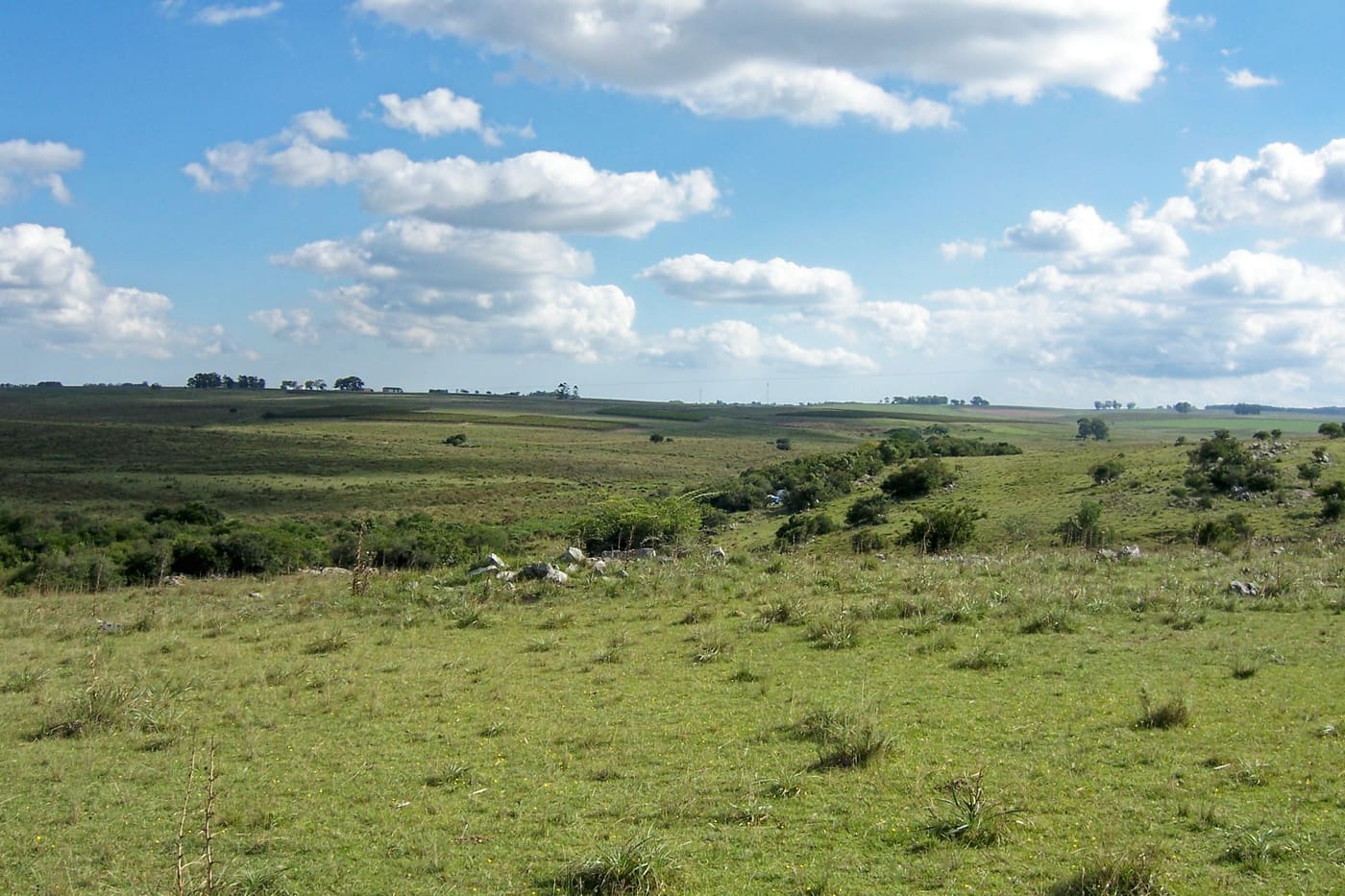
Campo: purely productive land
A campo is agricultural land with no or minimal buildings. No main house, often not even a dwelling, but correspondingly low non-productive maintenance costs and a clean economic profile.
Campos account for the majority of transactions in Uruguay. For investors who prioritise yield and scalability over personal use they are usually the right property type: straightforward to lease or run through a farm manager, with nothing that needs upkeep without producing income.
Estancia: operation and residence
An estancia is a complete rural estate: a main residence, staff housing, and enough land to sustain a viable business. It combines production with a substantial country seat.
Classic, architecturally intact estancias are rare and often traded discreetly. They appeal to buyers who want both, productive land and a private retreat. Economically it should be recognised that residential and representative buildings cost maintenance without generating income.
Chacra: rural lifestyle
A chacra is a smaller rural property, typically between roughly 5 and 100 hectares. Often located near desirable areas such as Punta del Este or Colonia/Carmelo, used for leisure, boutique agriculture, equestrian activity or tourism.
A chacra generally lacks the scale for commercial farming. As a second home or hospitality concept it can make excellent sense, but it should not be underwritten as an agricultural investment.
What scale works?
Rough orientation for commercially viable units:
| Use | Scale |
|---|---|
| Cattle | typically several hundred hectares |
| Cropping with residence | from several hundred hectares |
| Cropping, leased out | considerably smaller units workable |
| Forestry | larger areas required for scale |
These depend heavily on soil quality and location: highly productive soils sustain a smaller footprint, extensive grazing land requires considerably more.
Our view
For most DACH investors seeking capital preservation and running yield without relocating, the campo is the objectively correct property type. The estancia is right when the country seat is part of the objective and is costed openly. The chacra belongs in the quality-of-life category, not the investment one.
Frequently asked questions
What is the difference between a campo and an estancia?
A campo is purely productive land with minimal buildings. An estancia is a complete estate with a main residence and staff housing, combining production with a country seat.
How large is a chacra?
A chacra is typically between roughly 5 and 100 hectares and serves mainly lifestyle rather than commercial farming purposes.
This article is for information purposes only and does not constitute investment, legal or tax advice. AegisTierra does not provide legal or tax advice; it coordinates vetted local specialists.